Fatoumata Makeda Souletie Tounkara
OOT
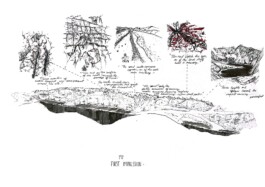
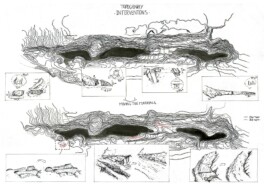
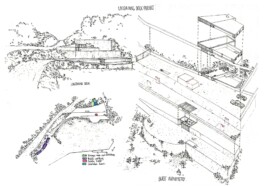
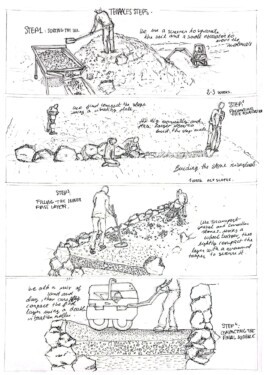
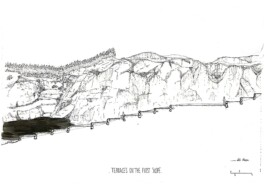
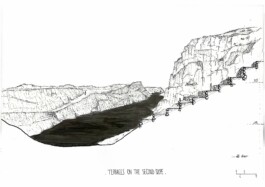
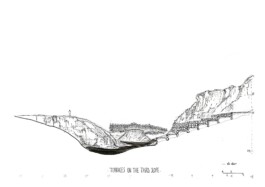
This project is based on a careful observation of Monte Neme and the need to preserve the site while securing access. The path begins at the unloading dock, where a space has been converted into a workshop for the site’s caretaker, then continues along a trail leading to a landscape marked by a series of slopes shaped by former earthworks, now stabilized by terraces, to reduce the risk of landslides and preserve the landscape. These interventions secure the soil and the path, offering visitors, who previously accessed the site illegally, a now authorized and safer access to appreciate this unique landscape.
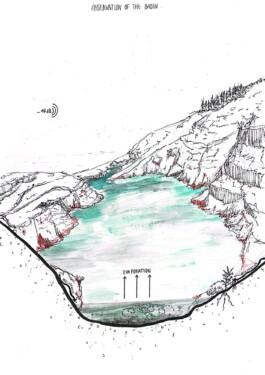
At the end of the site stands an amphitheater that serves both as a lookout point and a protective structure, capable of absorbing the force of water in the event of a sudden rise, in response to the 2014 accident when a landslide caused the lake to overflow toward nearby villages.
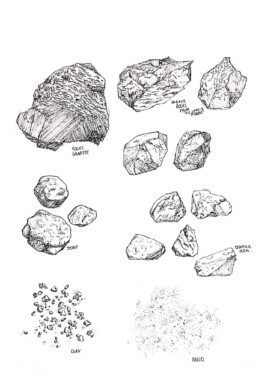
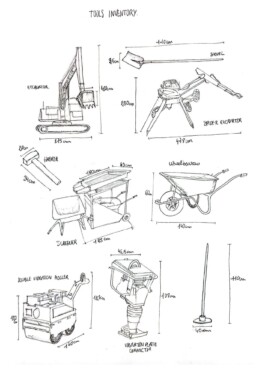
All interventions are carried out manually, using materials extracted on site. This deliberately slow and measured approach preserves the raw and shifting qualities of this industrial landscape, where every crack, every mineral tint, and every trace of exploitation composes an unexpected harmony. It enables safe contemplation without breaking the fragile balance between the strength of the slopes and the strange radiance of the acidic waters, both threatening and fascinating.

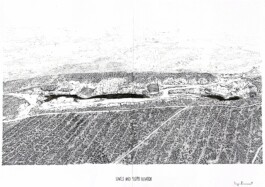
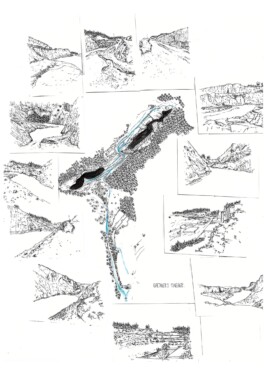

Monte Neme is located in Galicia, in the north of Spain. Once a tungsten mine exploited during the war, and later a quartz mine, it was abandoned in 2012. Today, its acidic lakes, formed by the contact of alkaline rocks, water, and oxygen, and its unstable soils testify to an industrial past where human intervention profoundly shaped the landscape.
Fatoumata Makeda Souletie Tounkara
OOT


Monte Neme is located in Galicia, in the north of Spain. Once a tungsten mine exploited during the war, and later a quartz mine, it was abandoned in 2012. Today, its acidic lakes, formed by the contact of alkaline rocks, water, and oxygen, and its unstable soils testify to an industrial past where human intervention profoundly shaped the landscape.
This project is based on a careful observation of Monte Neme and the need to preserve the site while securing access. The path begins at the unloading dock, where a space has been converted into a workshop for the site’s caretaker, then continues along a trail leading to a landscape marked by a series of slopes shaped by former earthworks, now stabilized by terraces, to reduce the risk of landslides and preserve the landscape. These interventions secure the soil and the path, offering visitors, who previously accessed the site illegally, a now authorized and safer access to appreciate this unique landscape.
At the end of the site stands an amphitheater that serves both as a lookout point and a protective structure, capable of absorbing the force of water in the event of a sudden rise, in response to the 2014 accident when a landslide caused the lake to overflow toward nearby villages.
All interventions are carried out manually, using materials extracted on site. This deliberately slow and measured approach preserves the raw and shifting qualities of this industrial landscape, where every crack, every mineral tint, and every trace of exploitation composes an unexpected harmony. It enables safe contemplation without breaking the fragile balance between the strength of the slopes and the strange radiance of the acidic waters, both threatening and fascinating.